
A Sinai icon of Christ Pantokrator dated to the sixteenth or seventeenth centuries. The Gospel displays the opening words of the following verses, Δεῦτε πρός με πάντες οἱ κοπιῶντες καὶ πεφορτισμένοι κἀγὼ ἀναπαύσω ὑμᾶς. Ἄρατε τὸν ζυγόν μου ἐφ’ ὑμᾶς καὶ μάθετε ἀπ’ ἐμοῦ ὅτι πρᾷός εἰμι καὶ ταπεινὸς τῇ καρδίᾳ καὶ εὑρήσετε ἀνάπαυσιν ταῖς ψυχαῖς ὑμῶν· ὁ γὰρ ζυγός μου χρηστὸς καὶ τὸ φορτίον μου ἐλαφρόν ἐστιν. ‘Come unto me, all ye that labour and are heavy laden, and I will give you rest. Take my yoke upon you, and learn of me; for I am meek and lowly in heart: and ye shall find rest unto your souls. For my yoke is easy, and my burden is light’ (Matthew 11:28-30).
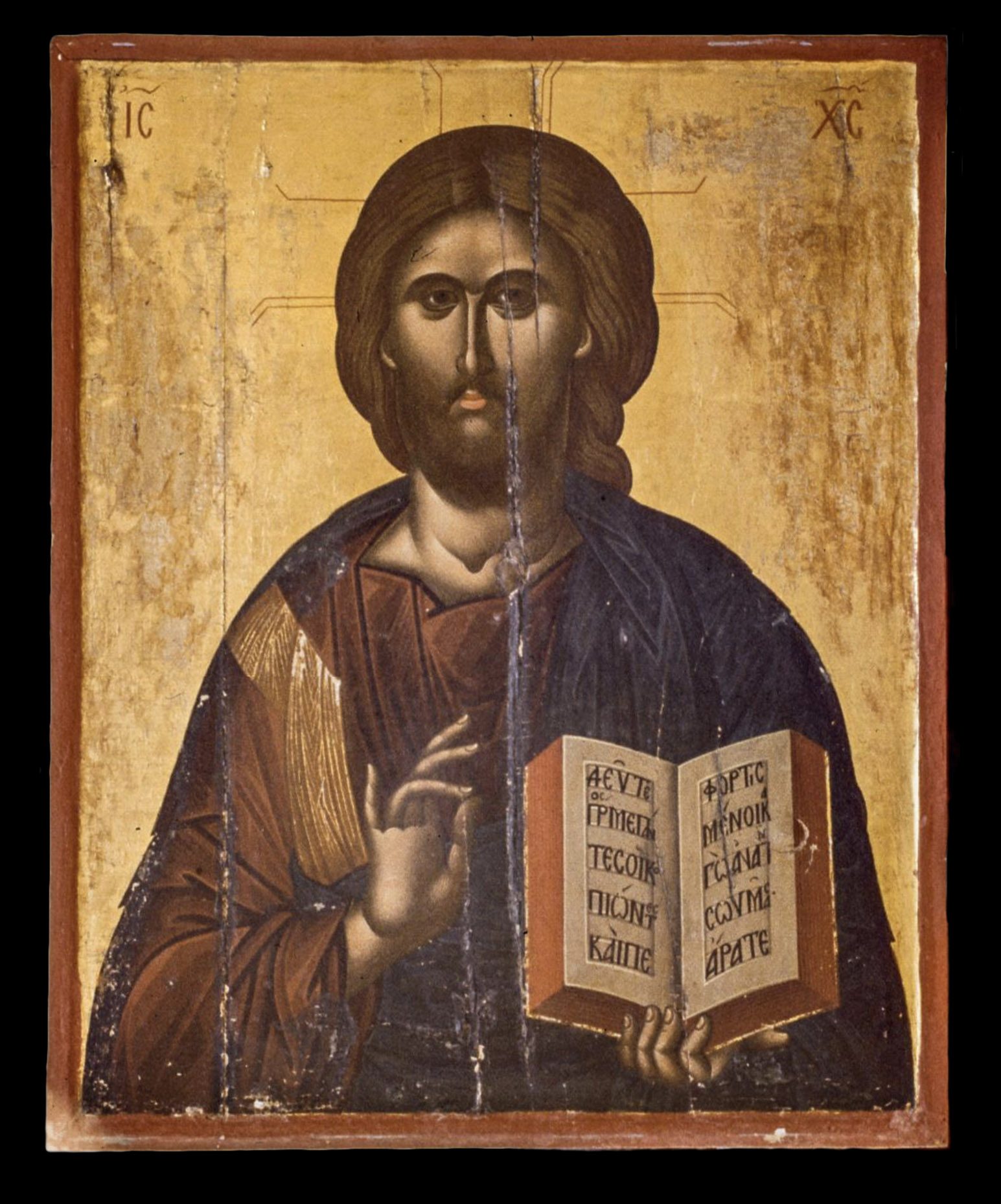
The Hebrew Scriptures were translated into Greek beginning in the third century before Christ. This translation is known as the Septuagint. In Job 5:17, 15:25, and 22:25, the Hebrew for ‘God Almighty’ was translated ‘Pantokrator’, meaning ‘Ruler of All’, ‘Almighty’, or ‘Ruler Omnipotent’. Μακάριος δὲ ἄνθρωπος, ὃν ἤλεγξεν ὁ Κύριος, νουθέτημα δὲ Παντοκράτορος μὴ ἀπαναίνου. ‘Βυt blessed is the man whom the Lord has reproved; and reject not thou the chastening of the Pantokrator’ (Job 5:17). In 2 Kings 7:8, and Amos 3:13, the Hebrew for ‘LORD Sabaoth’, ‘LORD of Hosts’ was also translated ‘Pantokrator’. Ἀκούσατε καὶ ἐπιμαρτύρασθε τῷ οἴκῳ ᾿Ιακώβ, λέγει Κύριος ὁ Θεὸς ὁ Παντοκράτωρ. ‘Hear, O ye priests, and testify to the house of Jacob, saith the Lord God Pantokrator’ (Amos 3:13).
This lexical heritage gives an added insight to the nine times the word Παντοκράτωρ is used in the Book of Revelation. Ἐγώ εἰμι τὸ Α καὶ τὸ Ω ἀρχὴ καὶ τέλος, λέγει ὁ κύριος ὁ ὢν καὶ ὁ ἦν καὶ ὁ ἐρχόμενος ὁ Παντοκράτωρ. ‘I am Alpha and Omega, the beginning and the ending, saith the Lord, which is, and which was, and which is to come, the Pantokrator’ (Revelation 1:8).
What a blessing to read these words and be reminded of the depths and assurance one can glimpse of God’s presence through Scripture and His Name. Thank you Fr Justin. I am always glad to see a post from you here.
Dear Father Justin,
Thank you for this post. It encouraged me to do some reading and helped my understanding.
Regards,
Richard
Dear Father Justin ,
Thank you very much for the precious information about Christ Pantokrator.