|
|
The first olives have been harvested and pressed for oil. Many of the trees are in remote locations, and the olives must be brought out by camels to the nearest road.

The olive trees at Arbain are old, and the olives produce a rich oil.

The olive trees at Bostane are not as old, and these produce less oil.

The olives are fed into a mill, which turns them into pulp. This is stirred for a set time, after which the oil is separated through a centrifuge.

Fresh olive oil has a mineral fragrance and a rich, complex taste.

Father Michael is in charge of the olive oil production. Friends of his entered the Sinai olive oil into international competitions, where it won gold medals for its flavour and health qualities.
Manuscript Greek 205 is a lectionary containing the Gospel readings appointed for each day. A large and imposing volume, it was created in Constantinople in the third quarter of the eleventh century.
Folio 114 recto displays a headpiece enclosing the title, written in letters of gold. The Gospel according to Luke.


The headpiece is filled with ornamental flower petals enclosing peacocks and other birds, rabbits, and small dogs. After almost a thousand years, the colours are still fresh and beautiful.
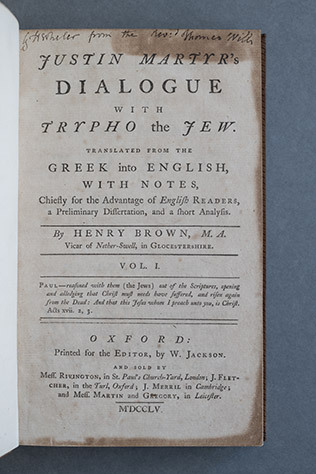
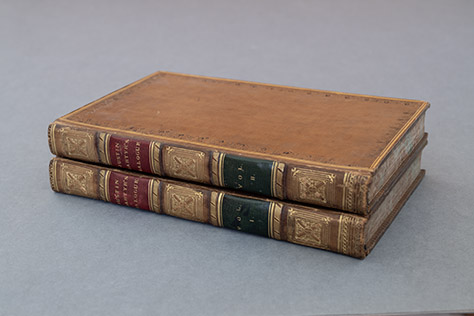

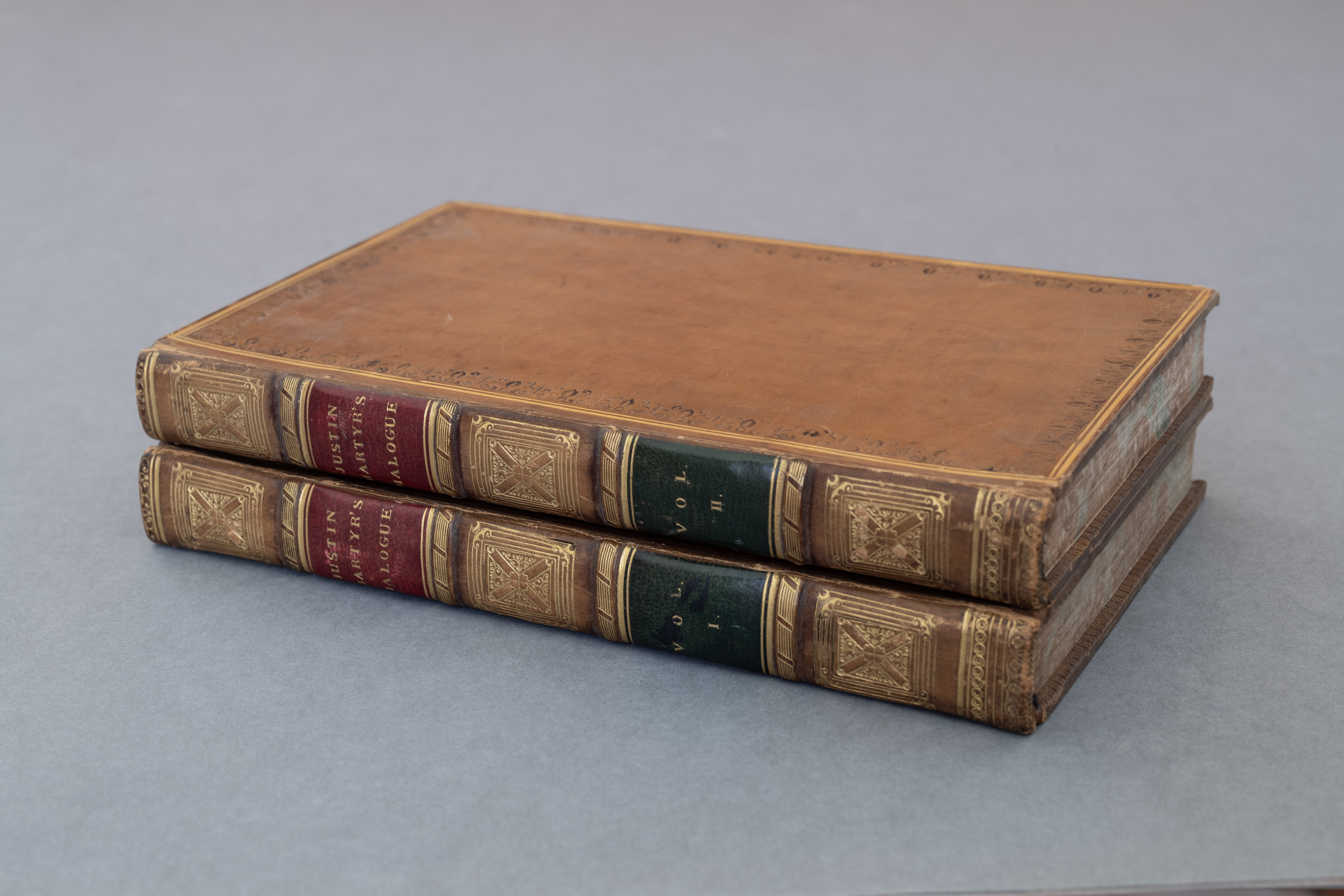
The first English translation of Saint Justin Martyr’s Dialogue with Trypho was made by Henry Brown, Vicar of Nether-Swell in Gloucestershire. It was printed in two volumes in Oxford in 1755.
This beautifully bound copy has a dedicatory inscription on the title page of the first volume, “G H Wheler from the Revd Thomas Wills.” Granville Wheler was a clergyman of the Church of England. He lived at Otterden Place, in Faversham, Kent, England. In 1729, he was the first to prove that electricity can be conducted, for which he was elected a Fellow of the Royal Society. Granville Wheler died in 1770, and his library was dispersed the following year. In 1774, Thomas Wills married Selina Margaretta Wheler, third daughter of Granville Wheler.
The holy apostle Paul wrote of Christ as the New Adam. ‘For as in Adam all die, even so in Christ shall all be made alive’ (I Corinthians 15:22).
Saint Justin Martyr writes of the Virgin Mary as the New Eve. By her obedience, ‘Behold the handmaid of the Lord; be it unto me according to thy word’ (Luke 1:38), she undid the disobedience of our first mother. The Dialogue with Trypho is thought to have been written between the years AD 155-160.
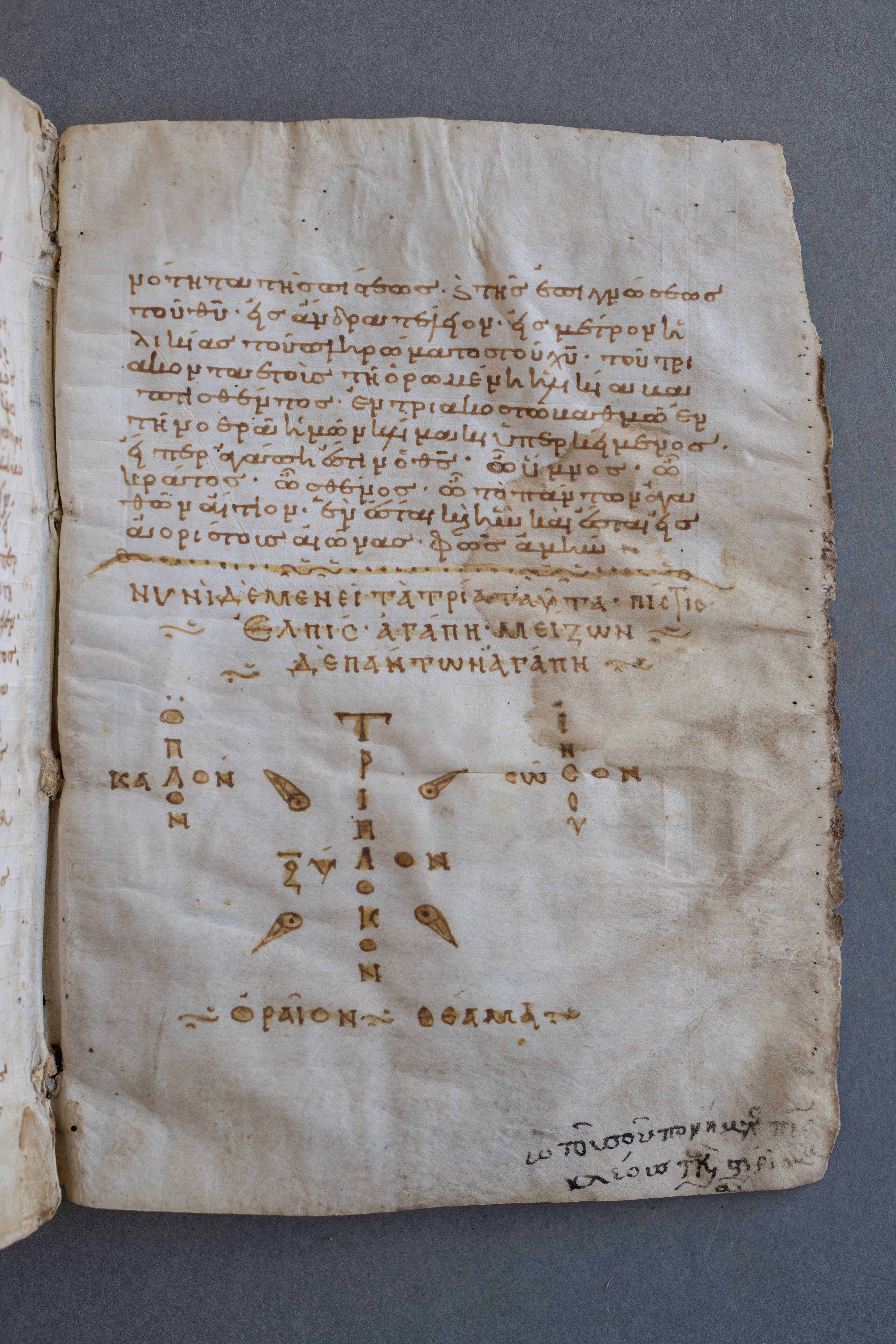
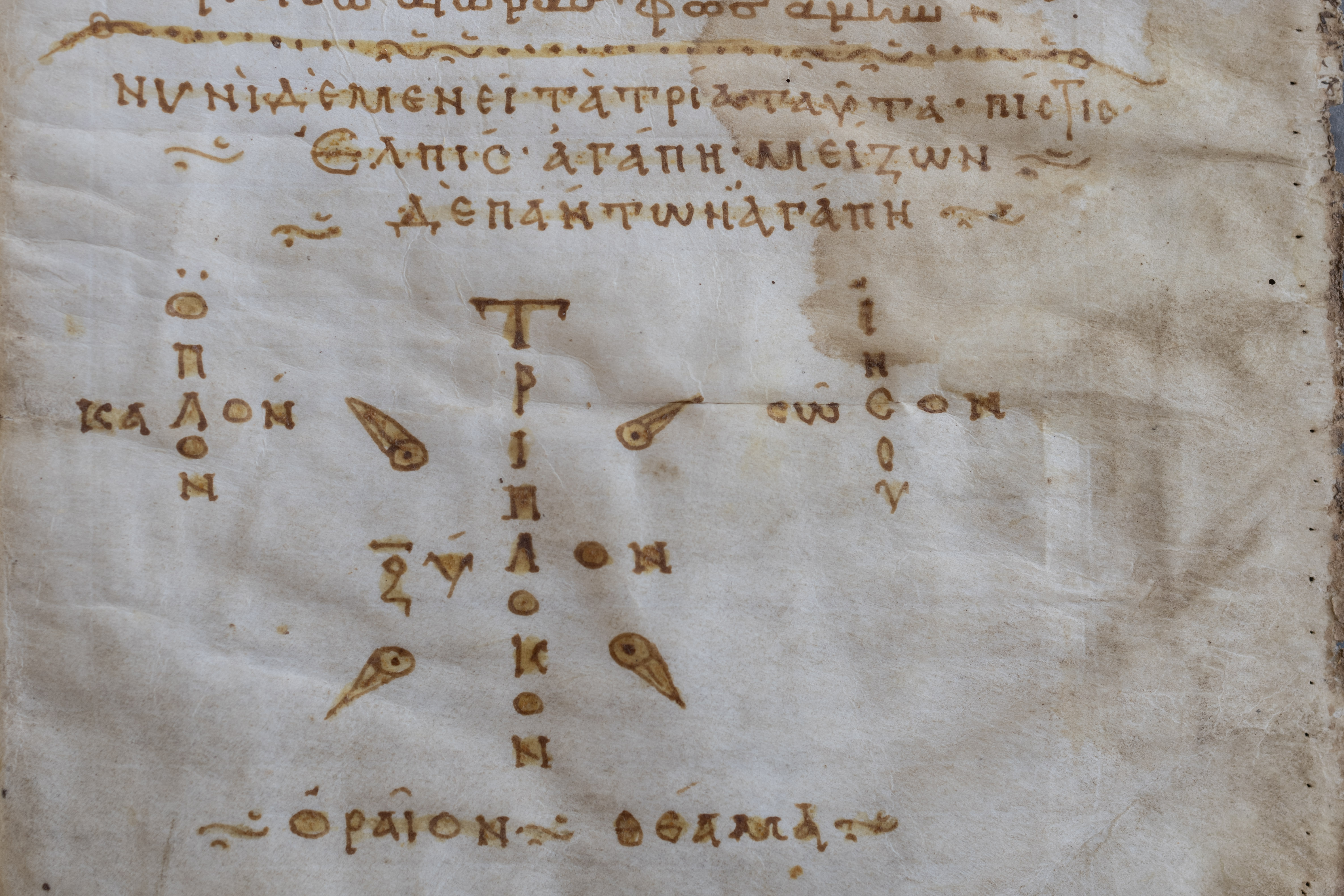
Sinai manuscript Greek New Finds Minuscule 134 is an incomplete copy of the Ladder of Divine Ascent. It is written on parchment, and has been dated to the tenth or eleventh century. Saint John Climacus concludes his great work with a quotation of the last verse of the thirteenth chapter of First Corinthians, Νυνὶ δὲ μένει τὰ τρία ταῦτα· πίστις ἐλπίς αγάπη· μείζων δὲ πάντων ἀγάπη, ‘And now abideth these three: faith, hope, love; but the greatest of all is love.’ (I Corinthians 13:13)
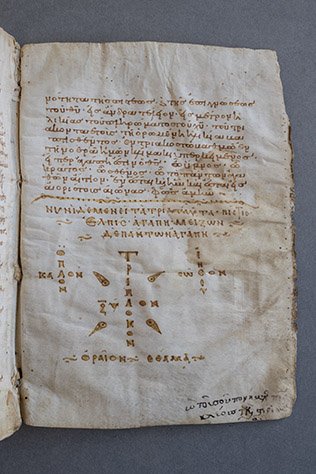
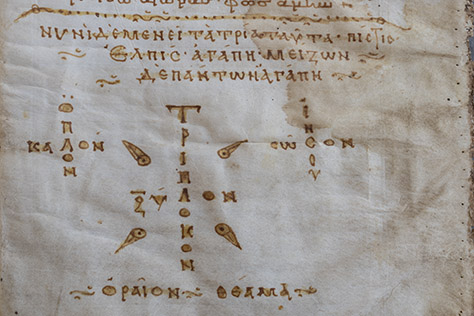
When two Greek words share a common central letter, they can be written in cross form. Below, the scribe has written (on the left), ὅπλον καλόν, ‘A good shield’ (a reference to Ephesians 6:11). To the right, he has written, Ἰησοῦ σῶσον, ‘Jesus save us’. And in the centre he has written τρίπλοκον ξύλον ὀραῖον θέαμα, ‘Threefold Wood, wondrous vision’. The Cross was made from cedar, pine, and cypress.
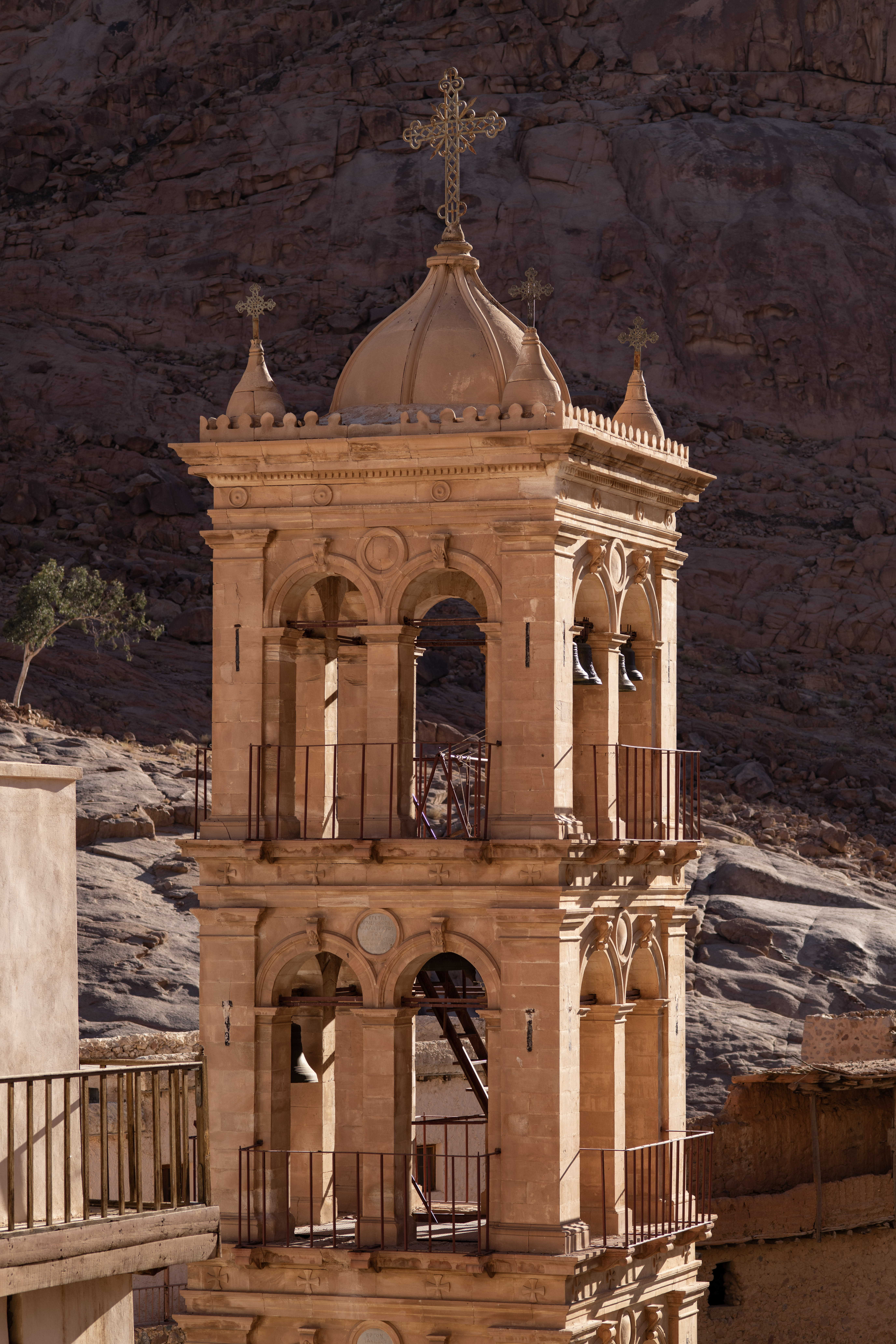
A little later in the morning, the bell tower is in full sun, and the sunlight begins to reach the mountains behind.
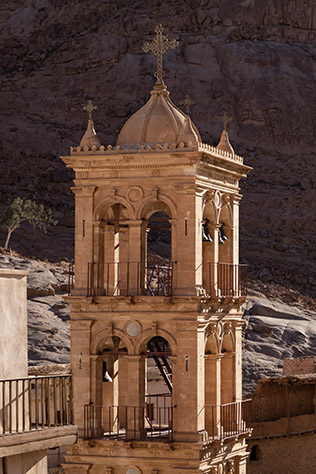
In October, the first rays of sunlight strike the south side of the bell tower.

Sinai Greek 690 is a beautiful little manuscript containing a canon to the Prophet Moses in each of the eight tones (to be chanted on Saturdays, in the tone of the week), and the service to Saint Catherine. It was written by the Hieromonk Ioakeim in 1647. Some of the decorative initial letters are quite beautiful, executed with complete mastery in a brilliant vermilion.

The letter ‘tau’.

The letter ‘delta’.

The decorative elements of this letter have almost submerged its recognizable form, but from a quick glance at the succeeding letters, we know that it is a ‘delta’.
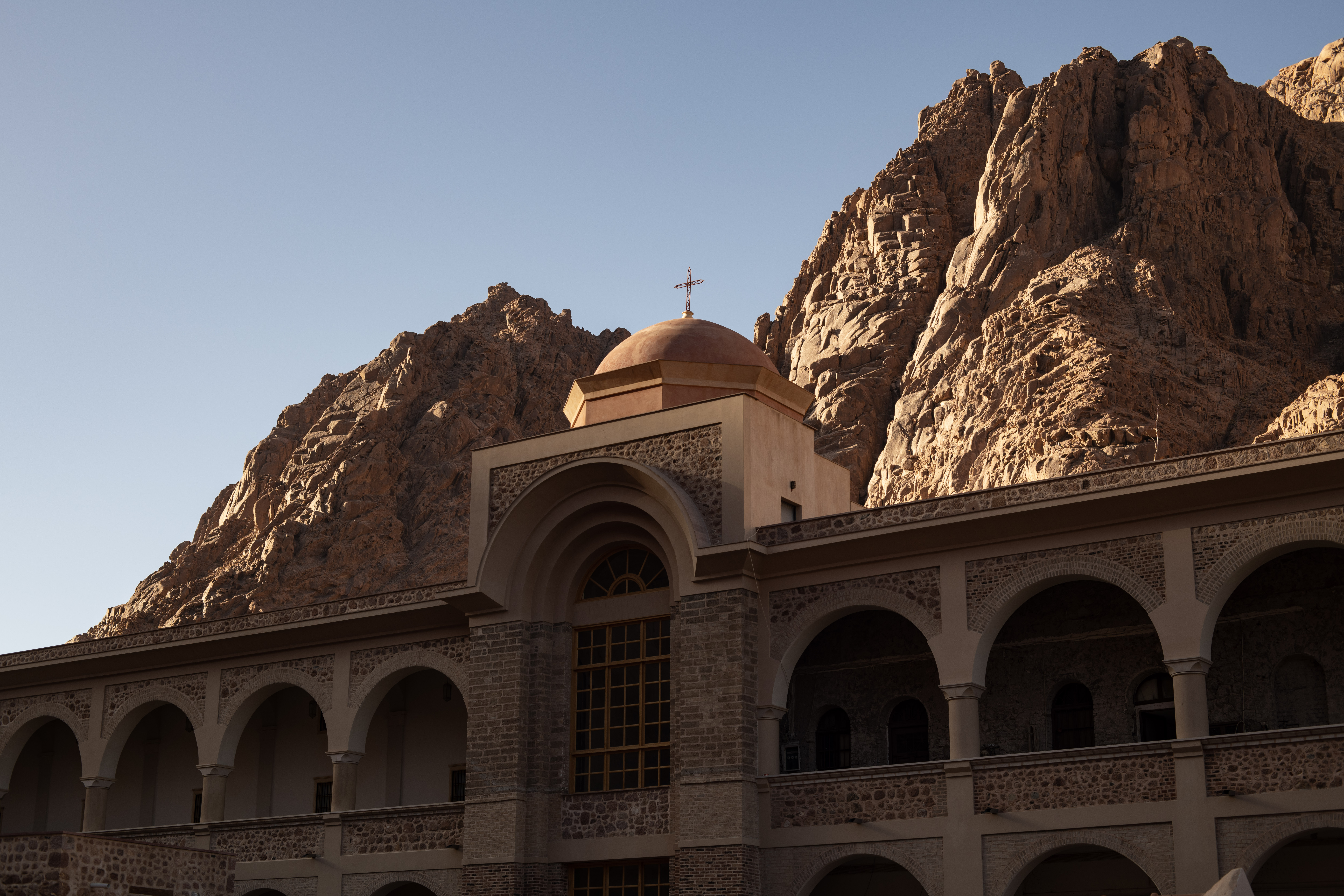
The dome over the south wing is the highest point in the monastery, and the first to catch the rays of the morning sun.
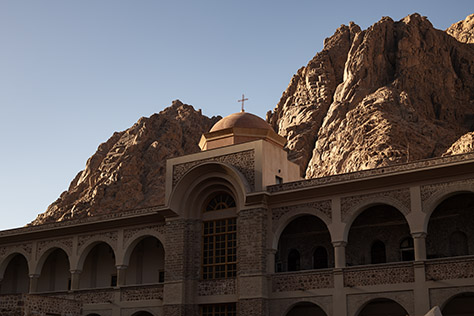
The first rays of sunlight on the mountains to the north of the monastery.

The mountains to the east of the monastery look like a monolithic face. But as the sun sets, shadows reveal that there is a ridge, with an intervening valley and mountains beyond. The hermitage of Saints Galakteon and Episteme is in the valley. It is said that when the Elder Paisios was living in the hermitage, at night he would climb to where he could see the monastery below in the distance, and from there he would pray for the members of the community.


|






Recent Comments