Archives

Recent Comments

Holy Five Martyrs

We have a small chapel dedicated to the holy martyrs Eustratius, Auxentius, Eugenius, Mardarius, and Orestes, whose feast day is December 13.

The Prayer of Saint Mardarius is read at the end of the Third Hour.

Δέσποτα Θεέ, Πάτερ παντοκράτορ, Κύριε Υἱὲ μονογενές, Ἱησοῦ Χριστέ, καὶ ἅγιον Πνεῦμα, μία Θεότης, μία δύναμις, ἐλέησόν με τὸν ἁμαρτωλόν· καί, οἷς ἐπίστασαι κρίμασι, σῶσόν με τὸν ἀνάξιον δοῦλόν σου· ὅτι εὐλογητός εἶ, εἰς τοὺς αἰῶνας τῶν αἰώνων. Ἀμήν.

O Sovereign Master, God the Father Almighty, O Lord the Only-begotten Son, Jesus Christ, and Thou, O Holy Spirit, one Godhead, one Power, have mercy on me, a sinner; and by the judgments which Thou knowest, save me, Thine unworthy servant; for blessed art Thou unto the ages of ages. Amen.

Scattered Rain Clouds

Scattered rain clouds gather over the monastery at dusk.

Winter Sunrise

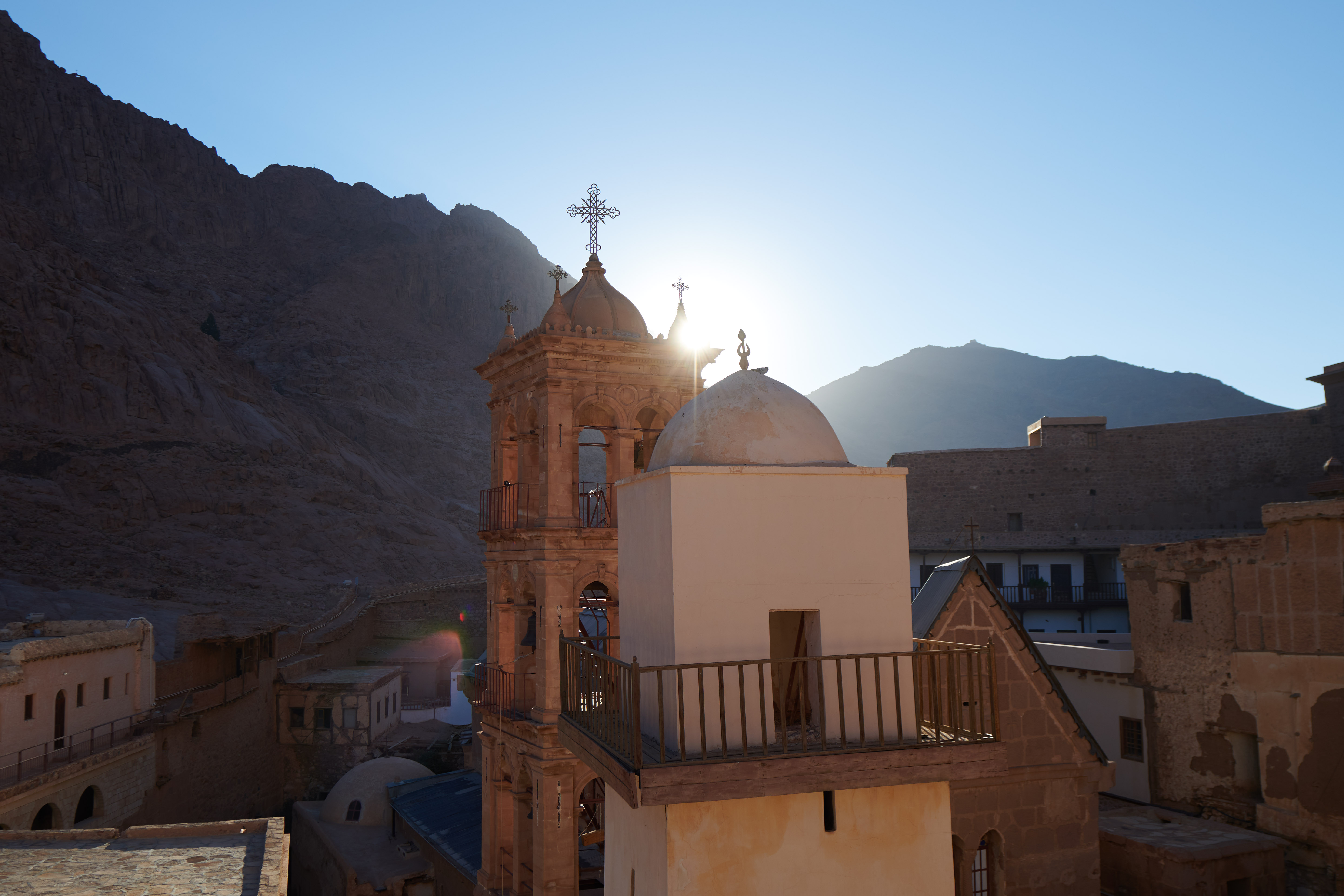
The first rays of the sun, rising behind the bell tower and minaret. A pigeon has flown to the top of the minaret to catch the warmth of a new day.

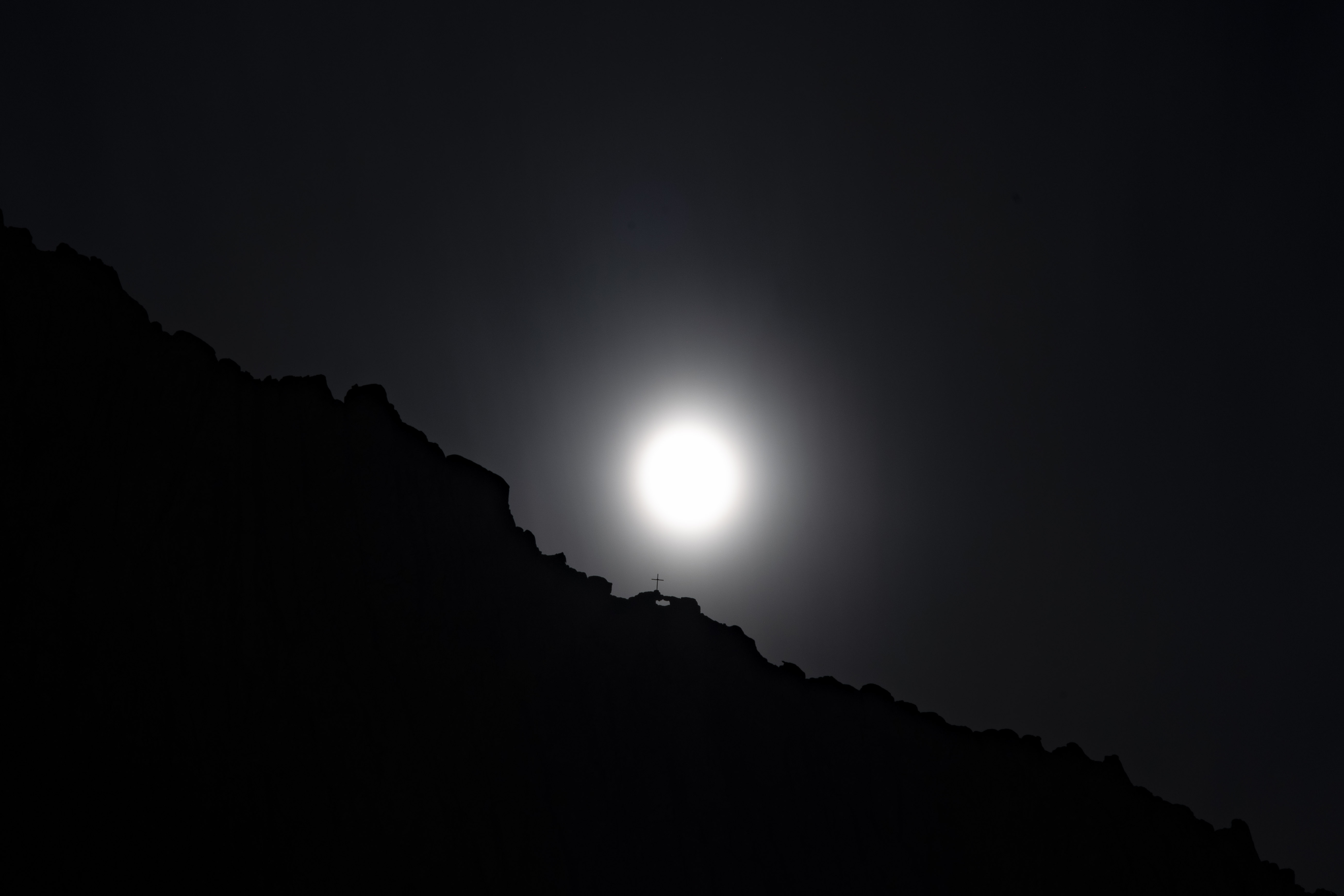
Moon Over Granite Arch

A full moon behind light clouds rises over a natural granite arch surmounted by a cross.

Saints Galakteon and Episteme

This year, five of us climbed to the small Chapel of Saints Galakteon and Episteme for the celebration of the Divine Liturgy. The newly glorified Elder Paisios lived at Sinai from 1962 to 1964, and spent time in prayer and solitude at this hermitage.

The Holy Table in the chapel, with frescoes by Father Pachomius, a monk who died in 1958.

The iconostasion of the small chapel.

There is a spectacular view of the summit of Mount Sinai from the porch of the hesychasterion.

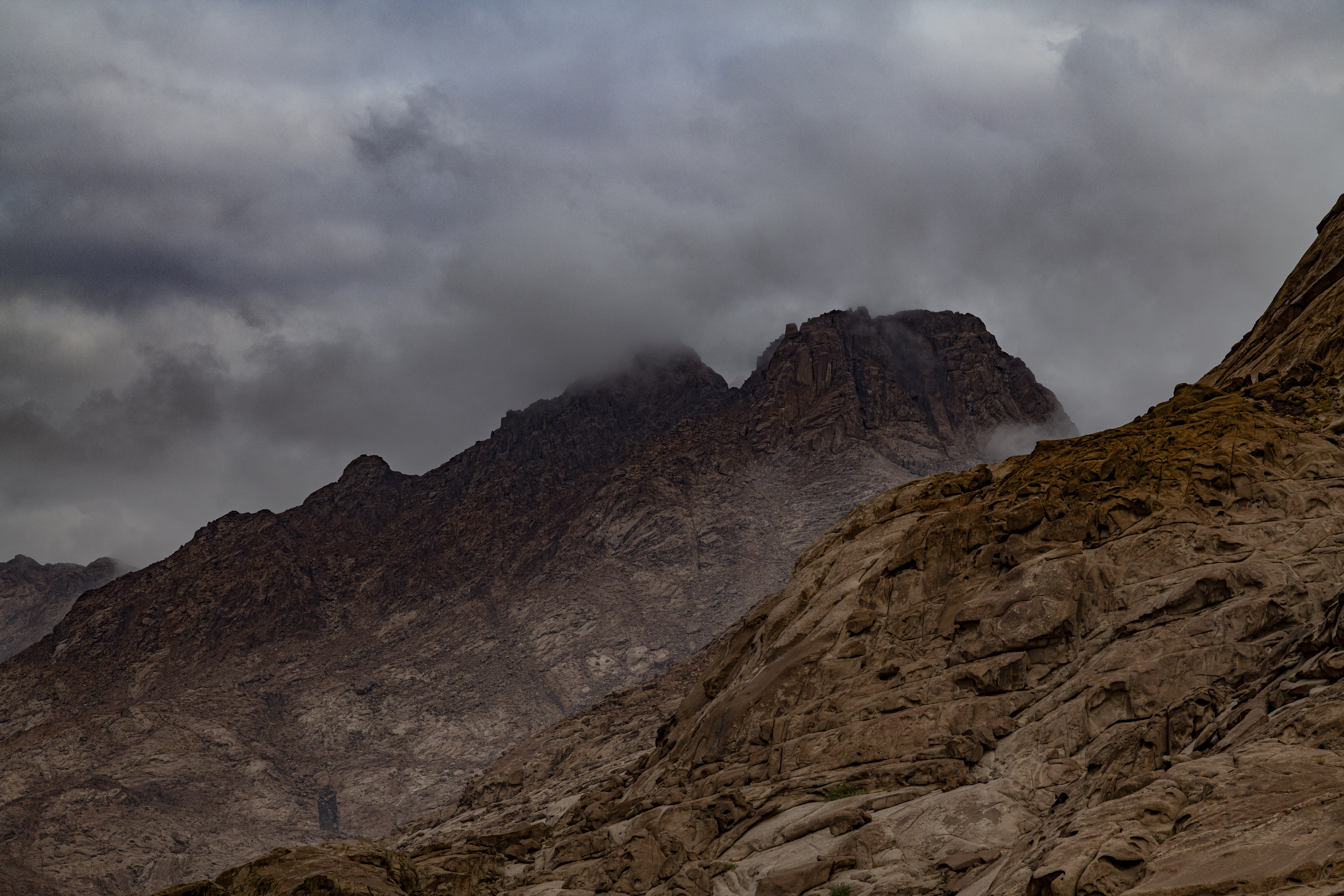
Mountains After Rain

Mountains to the west of the monastery as the clouds lift after rain.

Sunrise After Rain

It began to rain on Saturday, and the rain continued through the night, the first rain since last spring. On Sunday morning, a faint sunlight appeared for just a moment as the rain clouds lifted.


Ceramic Cross

A ceramic tile with a beautiful cross in shades of blue. There are two such tiles on the back wall of the Chapel of the Burning Bush, one to either side of a large icon of the Tree of Jesse, depicting the genealogy of Christ.

Ceramic Inscription

The ceramic inscription over the throne of the Archbishop in the Chapel of the Burning Bush.

+ Ἀρχιερατεύοντος Κυρίου Ἀρχιεπισκόπου Ἰωαννικίου καὶ Οἰκονόμου ὄντος ἐν πόλει Δαμασκοῦ Γέροντος Κυρίου Φιλοθέου ἐτελειόθη τὸ παρὸν ἔργον ͵ΑΧΠ΄ ἐν μηνὶ Αὐγούστου.

+ When Master Archbishop Ioannikios was High Priest, and the Elder Master Philotheos was Oikonomos in the city of Damascus, the present work was completed 1680 in the month of August.

Ioannikios I Laskaris, from the Peloponnesus, was Archbishop of Sinai from 1671 to 1702

The Chapel of the Burning Bush

Ὁ γὰρ τόπος, ἐν ᾧ σὺ ἕστηκας, γῆ ἁγία ἐστί.

For the place whereon thou standest is holy ground. (Exodus 3:5)

The Chapel of the Burning Bush is the easternmost chapel of the great basilica at Sinai. The walls are lined with beautiful blue faience tiles, and the small apse is set with gold mosaic tessarae. The Holy Table is raised on four marble columns, allowing pilgrims to venerate the place of the Burning Bush beneath.

The Chapel of the Burning Bush is wide, and not very deep. Even my wide angle lens would not be able to take in the entire chapel. This photograph was stitched together from twenty-four overlapping photographs. It captures the subdued light of the chapel even during the day, and the way a few candles and lamps illuminate the small apse.