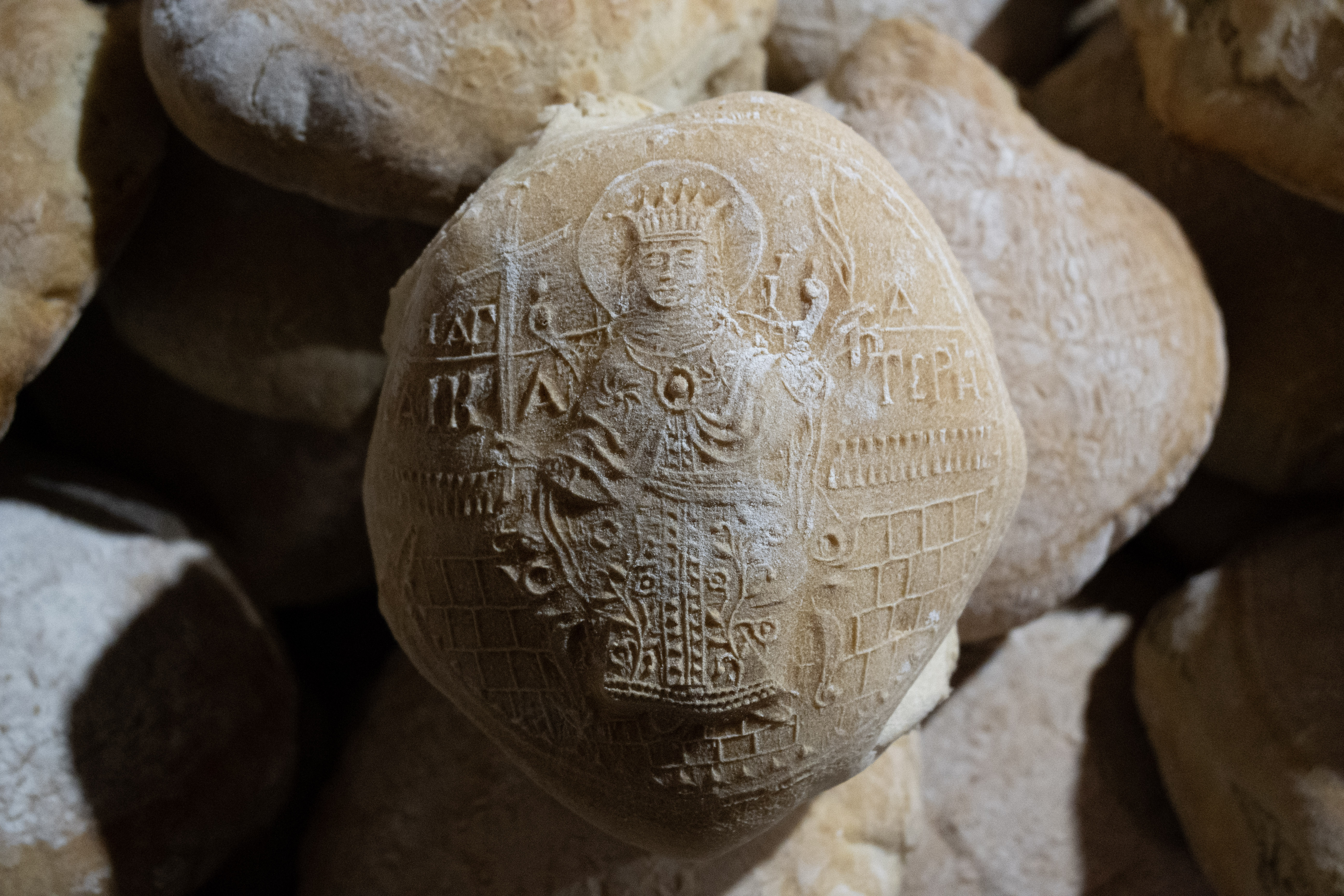
On Wednesday morning, we made three hundred loaves of bread for the feast of Saint Catherine. Each one was stamped with a carved wooden seal depicting the saint. These were blessed during the vespers service that evening, and given out to the pilgrims who had come to join us for the feast.
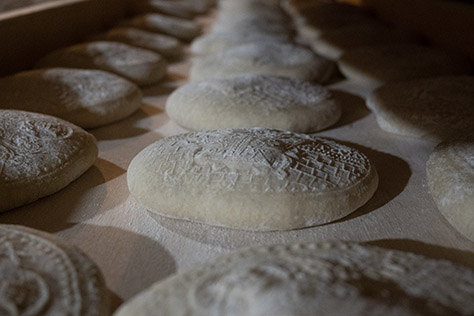
The loaves rising in trays.
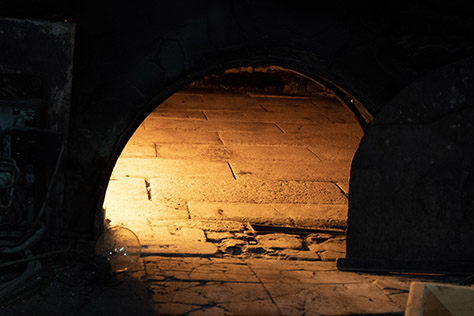
Heating the ancient stone and brick oven.
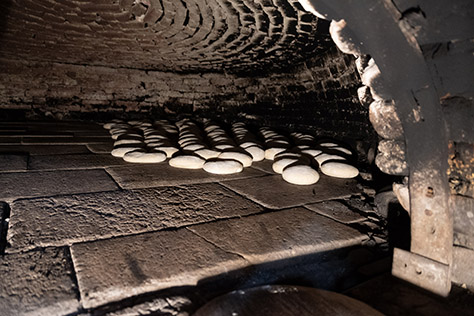
The loaves bake from the radiant heat given off by the stones and bricks. They are inserted and removed with a long wooden paddle.
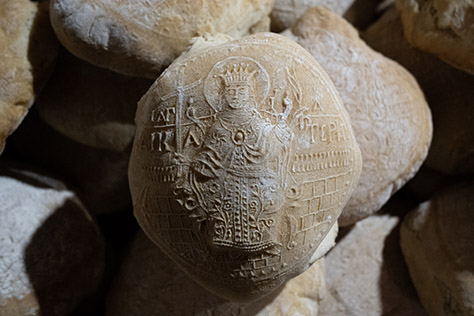
The wooden stamp depicts Saint Catherine seated upon a throne, and wearing a crown. In her right hand she holds a cross, and in her left, the palm of victory. She is wearing the robe of a princess, embroidered with flowers and stars.

The Holy Table at night, lit only by candles. Many Gospels are ranged across the back of the Holy Table.
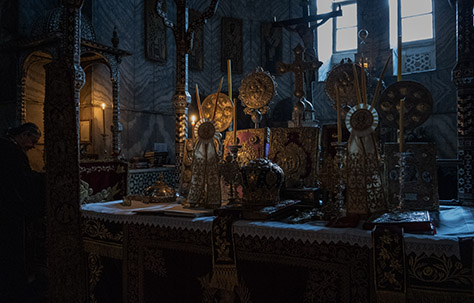
With the arrival of a new day, the bishop’s mitre is placed on the Holy Table, together with the dikirion and trikirion, the candlesticks with two and three candles each, with which the bishop will bless the faithful. This year, Metropolitan Nicholas of the diocese of Mesogaia in Greece celebrated the Divine Liturgy, together with many priests and deacons. It was my turn to be priest for the week. It was a joy to take part in the service, but I could not take as many photographs as I have in previous years.
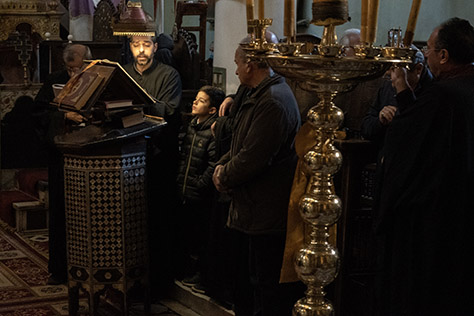
Many chanters came from Greece. Among them was Evangelos, the assistant photographer for the Sinai Palimpsests Project. He brought his son, eight years old, who is already helping at the chanting stand.















Recent Comments